


Montessori Children and Nature
- Caroline Baughman

- May 3, 2023
- 3 min read
Now days most children spend a majority of their days inside. At home and in school children are enclosed indoors with the same sensory stimuli every day with little opportunity to explore and appreciate all that nature has to offer. While television and other devices allow the child to see an abstract view of nature, it doesn't immerse their senses or captivate their imagination and wonder.
As adults we also live most of our lives indoors and have lost our connection with nature. Think about this.....When was the last time you went for a stroll? What is your relationship with nature? When was the last time you felt grass or dirt under your toes or allowed rain to caress your face? Do you still feel the wonderment or notice the everyday miracles that occur in nature?
It’s time for adults to connect, or rather reconnect, with nature. One of the most important aspects of Montessori is to model for your child, and this includes appreciating and caring for nature.

Montessori and Nature
Nature is a fundamental and integral part of the Montessori Pedagogy. It is a rich environment that offers sensorial experiences and is a wonderful atmosphere for children to explore and learn. In fact, Maria Montessori considered nature an extension of the classroom due to the effects on the whole child. Nature provides the perfect environment for physical, social, emotional, and cognitive development. Nature can also provide other benefits including;
Teaching children about the environment and influences a love and care for the Earth.
It lends itself to cosmic education and helps the child understand they are part of a larger universe and the profound meaning of life.
Assist in children learning responsibility and care and respect of the environment.
Fosters appreciation for the beauty and interconnection we have with the Earth.
Assists children’s development of the senses, coordination, and understanding of scientific principles.

Montessori at Home
The next question is how should you include nature into your home life? There are several ways to incorporate nature into your Montessori home environment and routine. When outdoors;
🌲 You can go on child led walks and or nature expeditions to explore at the child’s pace (this allows them to take it all in and observe).
🐕 If you have a dog, allow your child to help walk them. Adding a second leash so the child can help while you have the safety leash is super helpful!
🤸🏻♀️ Get physical - ride bikes, jump, roll, jog, crawl, push, climb, run, or toss a ball.
⛄️ Explore every season - don’t forgo nature when it isn’t perfect, instead dress appropriately for rain, snow, heat and cold and take breaks when necessary to warm up, cool down and rehydrate.
🐚 Collect items you find in your travels from leaves and acorns to seashells and rocks.
🌞 Lay on the ground (or a comfy hammock) and look at the sky, see shapes in the clouds or the way the sun shines through the trees. Take in the silence, the smell, the warm breeze and the falling leaves.
🥕Create a garden of vegetables to show the correlation of plants and food or start a garden with flowers that the child can arrange.
🌿Visit a botanical garden or wildlife refuge to see new things and take pictures of items that interests your child to incorporate into shelf work.
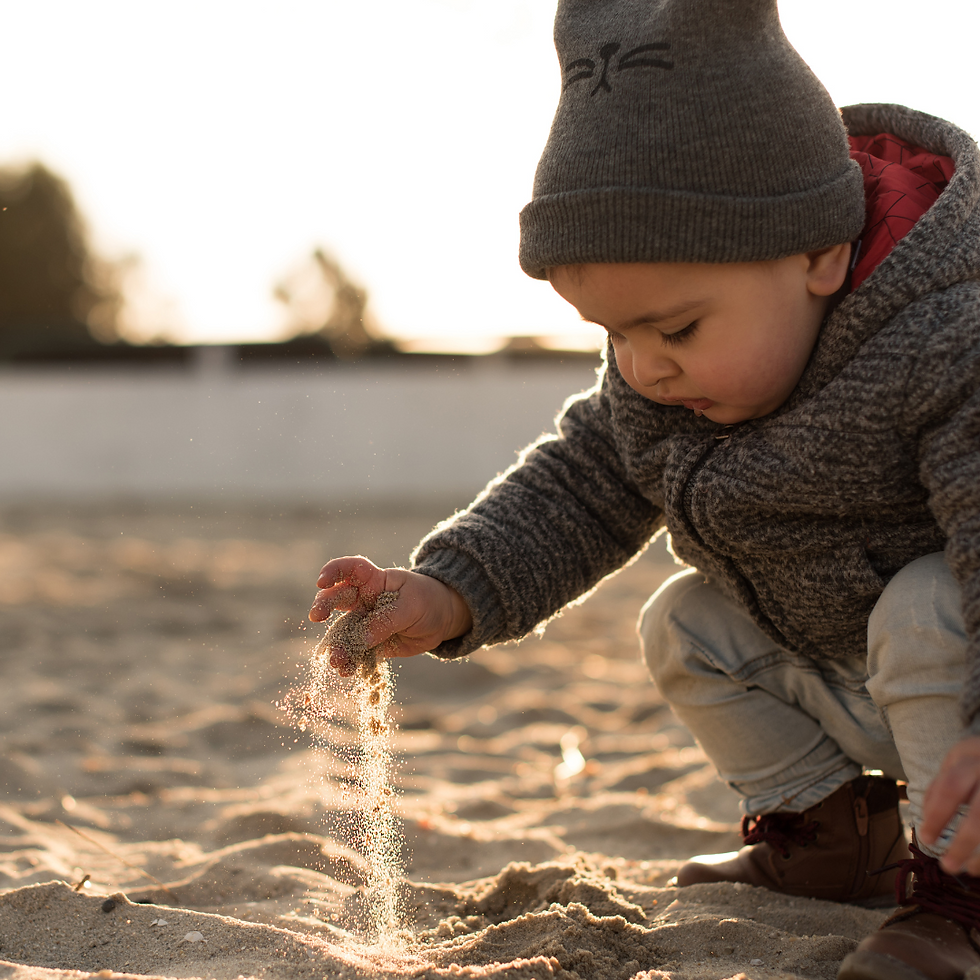
🪁 Have fun! Jump in a pile of leaves, build a sand castle or mud pies, splash in mud puddle, fly a kite, watch the birds eat from a feeder.
There are also ways that children can be indoors and engage with nature. They can stack or paint rocks that they have brought in from outside, do crafts with items they found while exploring (such as nature weaving), water and care for an indoor plant, and do prepared shelf work that includes nature such as life stages of plants and animals or doing cosmic education work.
Keep in mind that many children go through sensitive periods for tiny details or focusing on gross motor development. While we as parents may be bored or without excitement in these activities m, the child is never truly bored and they are always taking things in and learning if given the time. I recommend following your child’s lead on what they like, allow for time and opportunity, and find activities that match their interest.
In Conclusion
Nature is intertwined throughout the Montessori Pedagogy teachings and its important to allow children to immerse themselves in nature, to let it fill their senses and engage their body. The child's absorbent mind will take in the science behind the nature surrounding them while giving opportunity to connect with nature on a deep level.
Thank you for reading this weeks blog. Comment below and share how often you enjoy nature. Like ❤️, comment 💬, share 💌 and save. Follow me on Instagram (@UpstateMontessori) for more content!


Comments